
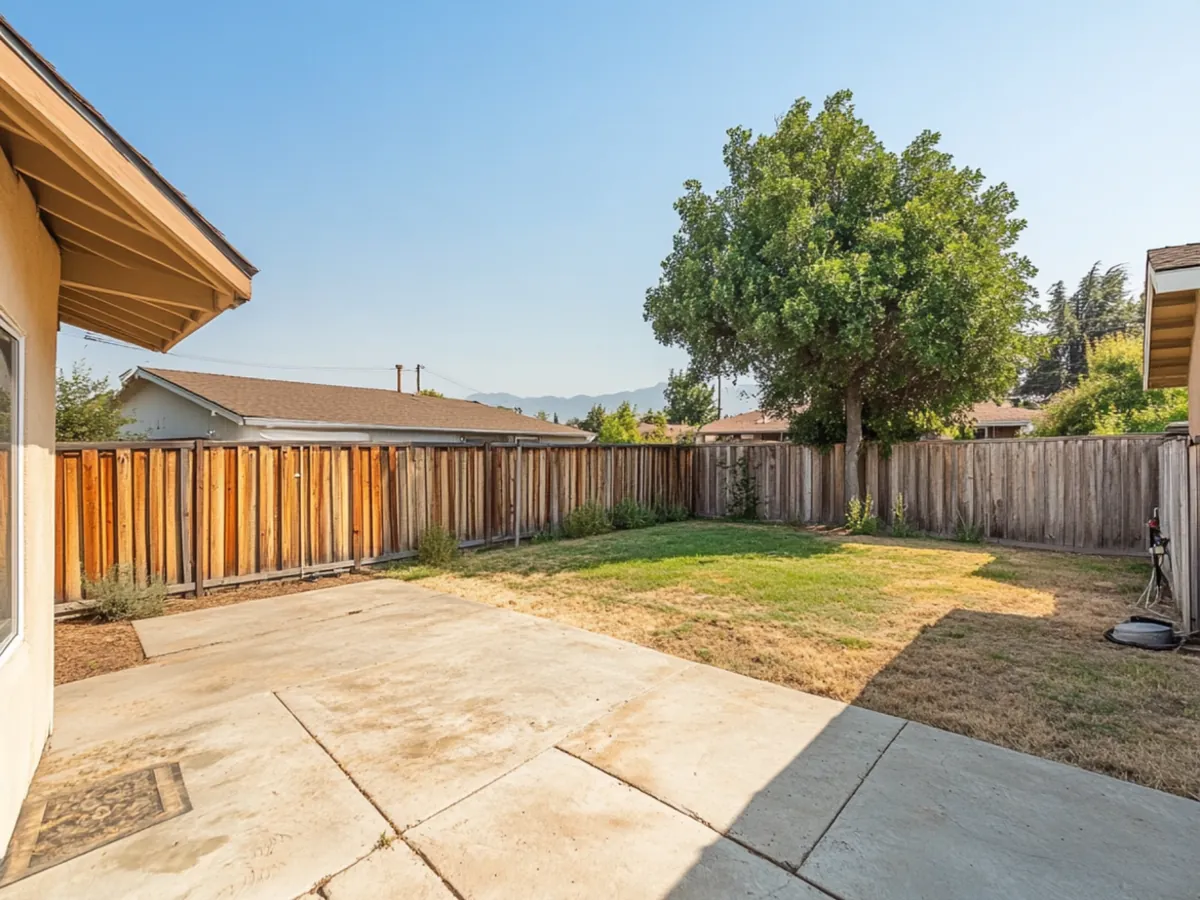
Wood is still the most common fence in Redding, and for good reason. It gives you real privacy, it looks right on almost any house, and it costs less up front than vinyl or metal. The catch is the sun. A south-facing wood fence here takes a beating every summer, and boards that weren't sealed start to gray, check and cup within a couple of seasons. The good news is that a wood fence built with the right lumber, set on solid posts and sealed on a schedule will hold up for a long time. Most of the wood fences we build here are 6-foot privacy fences, with shorter fences along front and side yards. We build them on everything from tight city lots to wooded hillside properties in Shingletown, where a fence has to work with slopes, trees and rocky soil.
Here we go over the signs it's time to replace an old wood fence, how cedar, redwood and pine compare, how we build a wood fence step by step, and how often you'll need to seal it. Wood is also the cheapest fence to repair down the road, since a single board or post can be swapped without replacing a whole panel. If your current fence only needs a few posts or boards fixed, start with our fence repair page.
Signs Your Old Wood Fence Is Done
Wood shows its age in a few predictable ways. The boards turn gray and start to split along the grain. They cup, so the edges curl away from the rails. Nails pop out as the wood shrinks and swells through our hot summers and wet winters. You'll see gaps open up between boards that used to sit tight.
The bigger problems are underneath. Rot at the base of the posts, termite tunnels or soft wood where a sprinkler has been hitting for years. If you can push a screwdriver into a post near the ground, that post is failing.
A few bad boards can be swapped. When the posts are going along the whole line, it's usually time for a new fence.
Cedar vs. Redwood vs. Pressure-Treated Pine
Each wood has its place. Pressure-treated pine is the most affordable. It's treated with preservatives that resist rot and insects, which makes it a strong choice for posts. For anything going in the ground, we use lumber rated for ground contact, since standard treated lumber isn't made to sit in wet soil.
Western red cedar is lighter, naturally resists rot and bugs, and stays straighter than pine as it dries. It weathers to a silver gray if you leave it unsealed.
Redwood is the premium option. The heartwood, the darker red inner part of the tree, holds up best against rot and insects. Lighter sapwood boards cost less but don't last as long.
In practice, many of our fences use treated pine or steel posts with cedar or redwood boards. That gives you a strong frame and better-looking boards.
How We Build a Wood Fence
We start with the posts. Each one goes into a hole about three times its width, on a bed of gravel, set in concrete with the top sloped to shed water. Once the concrete cures, we run the rails, usually two on a 4-foot fence and three on a 6-foot privacy fence so the boards stay flat.
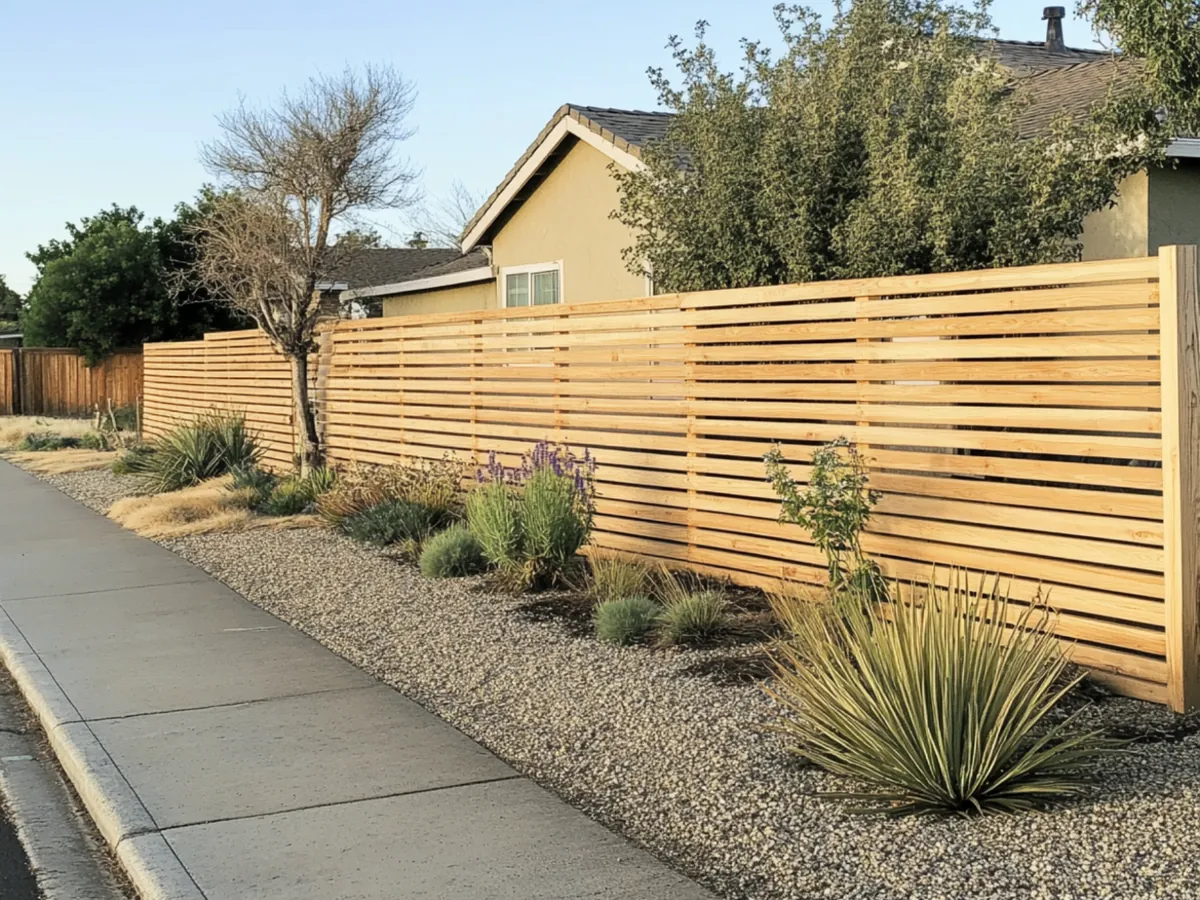
Then come the boards. A standard privacy fence uses boards butted tight. Board-on-board overlaps them so there are no gaps as the wood shrinks. Dog-ear is the classic clipped-corner look. Horizontal fences run the boards sideways for a cleaner, modern style.
We finish with a cap rail if the design calls for it, since it covers the end grain on top of the boards and helps keep water out. Then we hang the gates and clean up.
How Often to Seal a Wood Fence
In most places, a wood fence needs sealing every few years. In Redding, plan on every two to three years, sooner on sides that face south or west. Our summer sun dries the wood out fast, and an unsealed fence will start to check and gray within a season or two.
A penetrating oil-based stain works best here. It soaks into the wood instead of sitting on top, so it won't peel the way paint does. Wait a few weeks after install for new wood to dry out before the first coat, and pick a dry stretch in spring or fall so it can cure.
Keep sprinklers aimed away from the fence, and keep soil and mulch from piling up against the boards.
If you'd rather skip the sealing altogether, take a look at our vinyl fences, which give you the same privacy with almost no upkeep. We also build plenty of wood fences around Bella Vista, where bigger lots mean longer runs.