
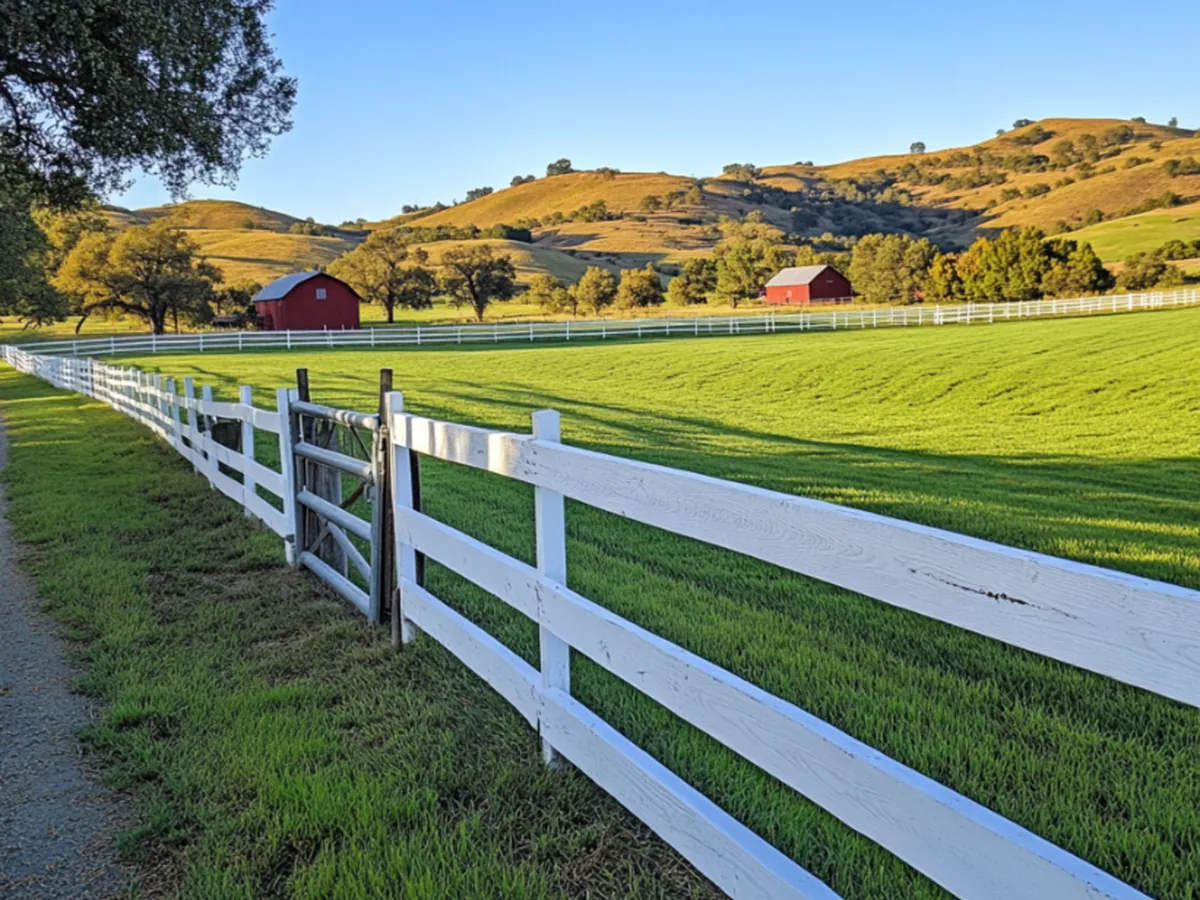
Palo Cedro is horse country, and the fencing out here reflects it. Drive Highway 44 east of Redding and you'll pass property after property with pasture, a barn and long runs of rail or wire fence along the road. Fences here usually aren't about privacy. They keep horses and livestock in, keep deer out of gardens and mark a property line that can run hundreds of feet. That means more posts, more corners, more gates and a lot more ways for a fence to fail if it's built light. Oak roots, clay and the occasional buried rock make the digging slower than in town, and long runs in the open take the full force of the wind. Seasonal creeks and low spots that stay wet through winter are common too, and they're hard on wood posts.
We build and fix fences all over Palo Cedro, from horse properties and small ranches to homes on a few acres that just want a nice wood fence around the yard. Most jobs here mix materials: a privacy fence near the house, rail or wire on the pasture and a wide drive gate at the road. Our gates page covers automatic openers, which make a big difference on a long driveway. Drive gates out here are often 12 to 16 feet wide so a truck and trailer can swing in. Pasture fences take longer than backyard fences, sometimes a week or more for a full perimeter, and we give you a clear schedule up front. Call or send the form for a free estimate.
Palo Cedro Fence Rules
Palo Cedro is unincorporated, so Shasta County's zoning rules apply instead of Redding's. In the required front yard, and on the street side of a corner lot, fences, walls and hedges are limited to 3 feet. In residential side and rear yards that don't face a street, the normal limit is 6 feet. The county code also carves out some exceptions for open wire fencing, which is the type most common on pasture.
For acreage, that usually means open rail or wire fencing along the road and taller privacy fencing only behind the house. Rules can vary with your zoning and any recorded easements, so we confirm the details for your parcel before we build. Road, power line and irrigation easements are common on rural parcels, and a fence built inside one may have to come out. On a shared boundary, California's Good Neighbor Fence Act generally treats both neighbors as responsible for the fence. Owners out in Millville fall under the same county rules.
Horse Fencing and Long Runs
Horse fencing is its own skill. Horses lean, rub and sometimes run into fences, so the fence has to be strong and safe at the same time. We build two- and three-rail wood fences, vinyl ranch rail and no-climb horse wire, which uses a tight weave a hoof can't get through. Many owners pair wire with a wood top rail so horses can see the fence line clearly. Barbed wire is common on cattle ground, but it's a poor choice for horses, which can tangle in it and get badly cut. We also build cross fencing to split a pasture so you can rotate grazing.
Long runs need strong anchors. Corners, ends and gate posts carry the tension of the whole line, so we brace them with diagonal or H-braces and set them deeper than the line posts. That's what keeps a 400-foot run of wire tight after a few winters.
Neighbors in Bella Vista run into the same long-run problems on their acreage. For gardens and orchards, deer fencing at 7 to 8 feet keeps them out. Closer to the house, many owners still want a wood fence around the yard for a cleaner look.