
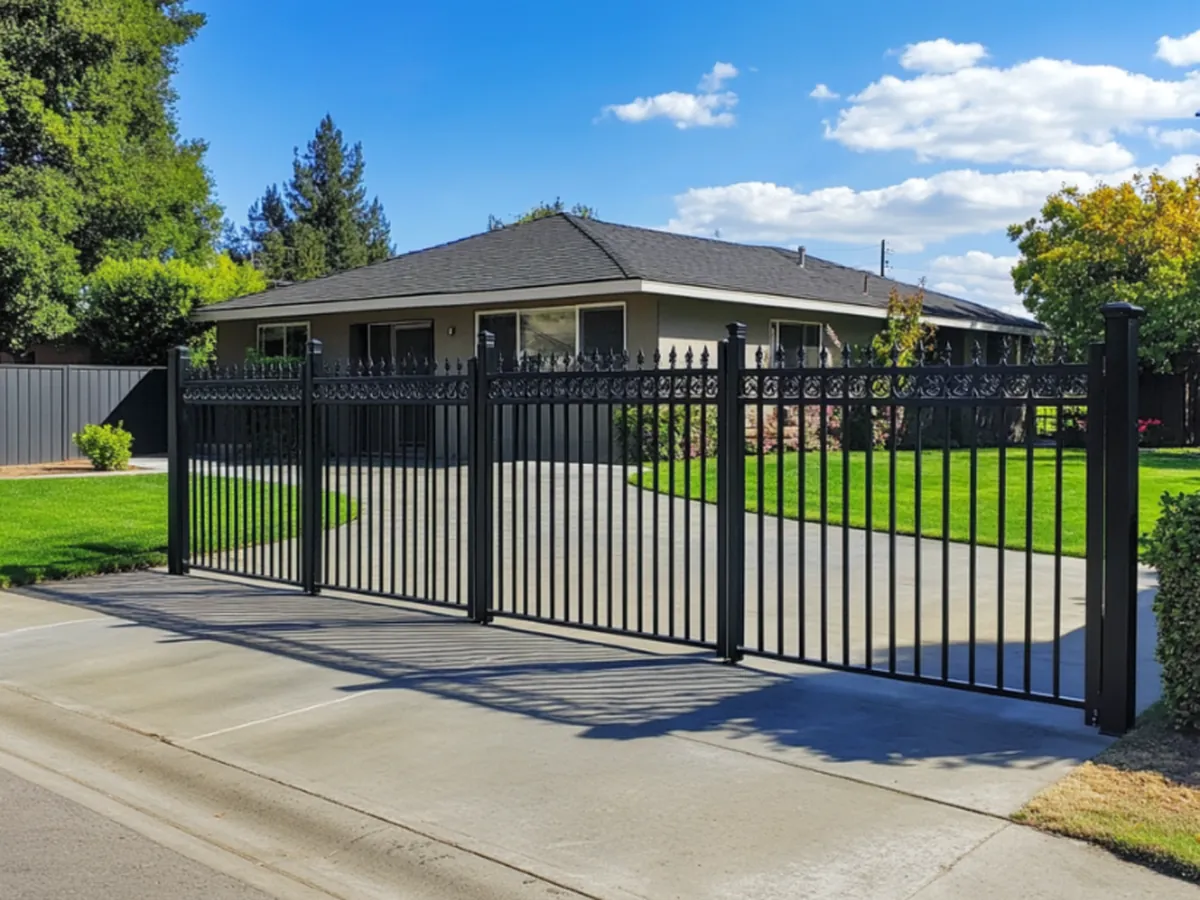
The gate is the part of a fence you actually use. You open it to take out the trash, let the dog into the side yard or pull the truck onto the property. So when a gate sags, drags or won't latch, you feel it every single day. Most gate problems trace back to the same few things: a post that wasn't set deep enough, hinges too light for the weight, or no brace to keep the frame square. Over time, a heavy gate on a weak post can pull the whole fence line out of plumb. We build gates to carry their own weight for years. That includes walk gates on city lots and wide drive gates on rural properties around Millville and Bella Vista, where an automatic gate saves you from getting out of the truck in the rain.
Below, we cover the signs your gate needs attention, the main types of gates we build, what to know about automatic gate openers, and how we build a gate that stays square. We also repair gates we didn't build, which is one of the most common calls we get. If the gate is part of a new metal fence, our aluminum and wrought iron fences page covers the panels that go with it.
Signs Your Gate Needs Work
A gate tells you when something's wrong. If you have to lift it to latch it, the gate has sagged, usually because the hinge post is leaning or the frame has racked out of square. If it drags on the ground or scrapes a groove in the dirt, same story.
Other signs include a latch that no longer lines up, hinges that squeak or have pulled loose from the post, and a visible gap that's wider at the top than the bottom. On automatic gates, watch for slow or jerky movement, a gate that stops halfway or one that reverses for no reason.
Most of these can be fixed. A leaning hinge post usually needs to be reset in concrete, and a racked frame needs a proper brace.
Types of Gates We Build
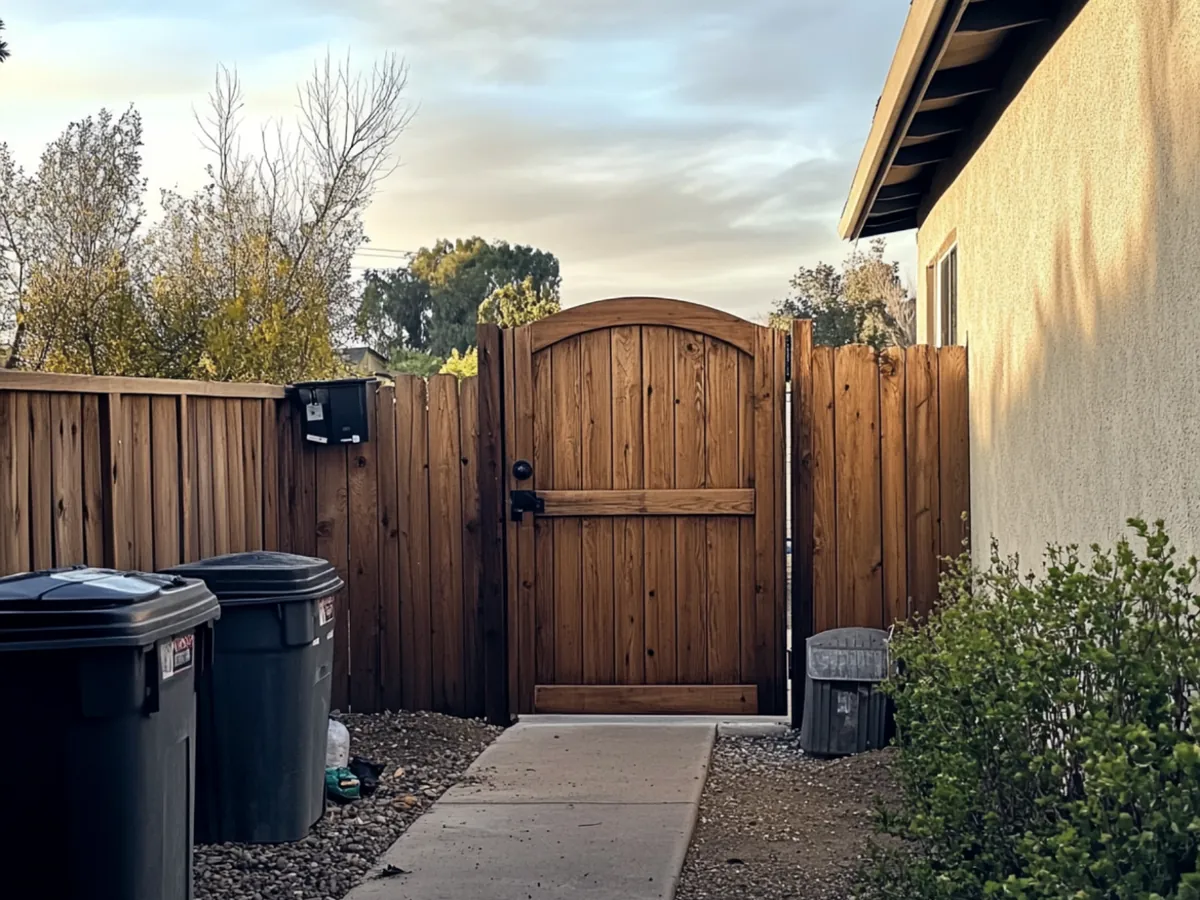
A walk gate is the single gate most people use every day, usually 3 to 4 feet wide. Wider walk gates, around 5 feet, make it easier to get a wheelbarrow or mower through.
Double drive gates use two leaves that swing open from the center. They're the most common choice for driveways and RV access, with total openings often in the 10 to 16 foot range. On acreage, tube steel ranch gates are common for getting a tractor or livestock trailer through.
Slide gates roll sideways along the fence line instead of swinging. They work well on sloped driveways or where there isn't room for a gate to swing.
We build gates in wood, vinyl, chain link and ornamental metal, and we match them to the fence they're part of.
Automatic Gate Openers
An automatic gate adds a motor, a control board and a way to trigger it: a remote, a keypad or a phone app. Swing gate openers use an arm that pushes the gate open. Slide gate openers drive the gate along a track.
Out on rural properties, solar-powered openers are common, since running power to the end of a long driveway can cost more than the opener itself. A good solar setup will run a typical residential gate year-round in our sunny climate.
Safety matters with any powered gate. Openers should meet the UL 325 safety standard, which covers entrapment protection. In plain terms, that means sensors or edges that stop and reverse the gate if something is in the way. We install photo eyes on every automatic gate we put in.
How We Build a Gate That Stays Square
A good gate starts with the hinge post. It carries the full weight of the gate on one side, so we set it deeper and wider than a line post, with more concrete. On wide drive gates, we often use steel posts.
Then comes the frame. A wood gate needs a diagonal brace that runs from the bottom corner on the hinge side up to the top corner on the latch side. That brace pushes the weight back toward the hinges and keeps the gate from sagging. Metal gates are welded square from the start.
We hang every gate on hinges rated for its weight, set the latch at a comfortable height and leave a clean, even gap at the bottom so it clears the ground.
Gates on long property lines often go with a simple, practical fence, so look at our chain link fences if you're fencing a big lot or pasture on a budget.