
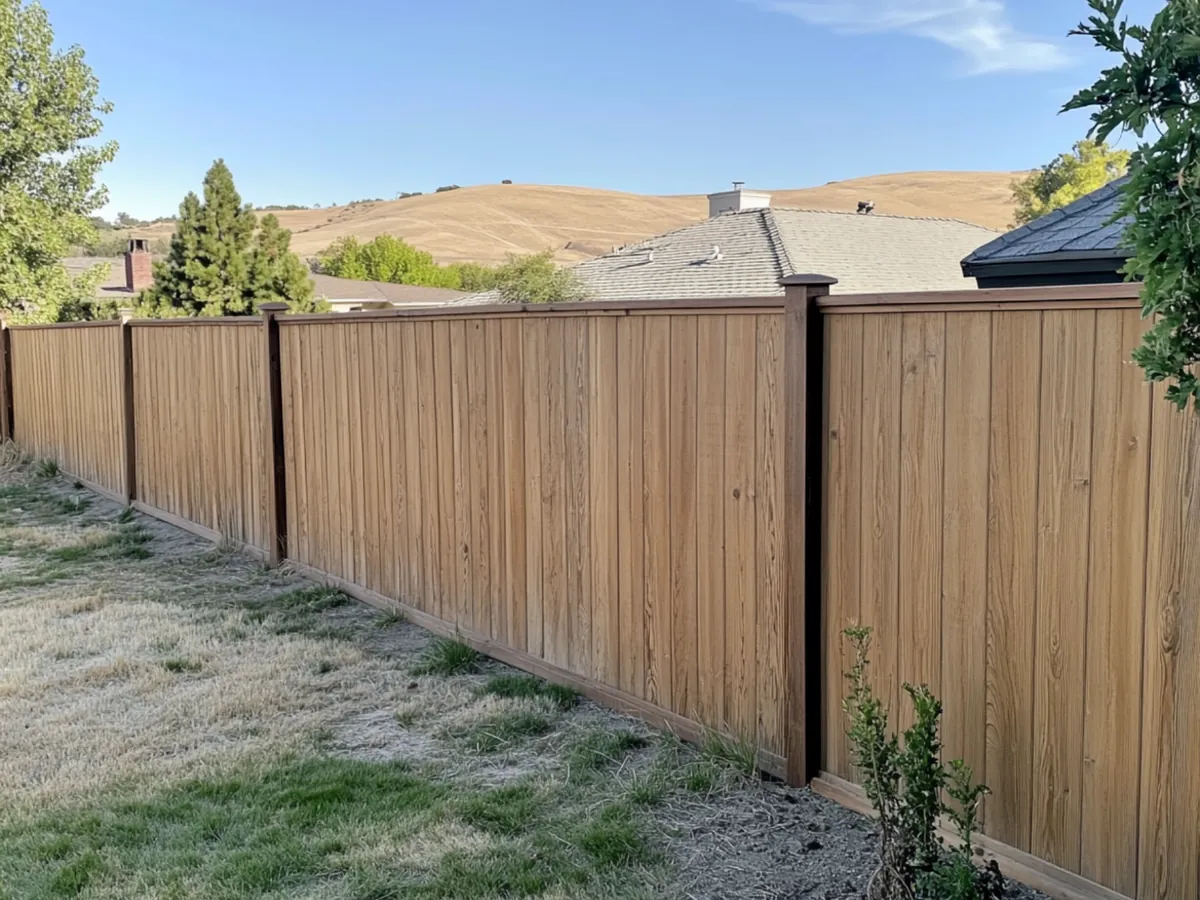
A new fence usually starts with a problem. The dog keeps getting out. A new neighbor put in a second story that looks straight into your yard. Or the old fence finally leaned so far that patching it stopped making sense. Whatever the reason, the fence you put up now should still be standing straight in 20 years. In Redding that takes more than good-looking boards. The ground here is a mix of clay, river cobble and buried rock, and summer heat dries everything out fast. We've set posts on hillside lots in west Redding and out on open pasture in Palo Cedro, and the dig is never the same twice.
Below, we cover the signs it's time for a new fence, what goes into one that lasts, how our install works from estimate to cleanup, and which fence type fits which job. Most fences in Redding don't need a building permit, but height limits still apply, and we check those for your lot before we quote anything. If you already know you want wood, our page on wood fences goes deeper on cedar, redwood and pine.
Signs It's Time for a New Fence
Some fences can be repaired. Others are past the point where repair money makes sense. You're probably looking at a replacement if more than a few posts wobble when you push on them, if whole sections lean, or if the boards are gray, split and pulling away from the rails. Termite damage at the base of the posts is another one. So is a fence that was never built to code in the first place, like a 6-foot privacy fence sitting in a front yard where Redding only allows 3.
Sometimes the fence is fine and your needs changed. You got a dog that jumps. You put in a pool. You bought horses. In those cases the right move is a new fence built for the job, since a fence designed for one purpose rarely handles another well.
What Makes a Fence Last: Posts, Depth and Drainage
Most fence failures start at the posts. The standard rule is to bury about a third of the post's length, so a 6-foot privacy fence gets 8-foot posts set 2 feet or more into the ground. Corner, end and gate posts carry the most load, so we go deeper and wider on those.
The hole matters as much as the post. We dig it roughly three times the post's width, put 4 to 6 inches of gravel in the bottom for drainage, then set the post in concrete and slope the top so water runs away. In clay, that gravel is the difference between a post that dries out after a storm and one that sits in a puddle all winter.
Post spacing runs 6 to 8 feet on most wood and vinyl fences. Closer spacing costs a bit more and holds up better against the north wind.
How Our Fence Installation Works
It starts with a free estimate on your property. We walk the line with you, measure, talk through materials and heights, and leave you with a written quote.
Before anyone digs, we call in a utility locate so we know where the gas, water and power lines run. We confirm your property line from your survey or lot pins and check the height limits for your lot.
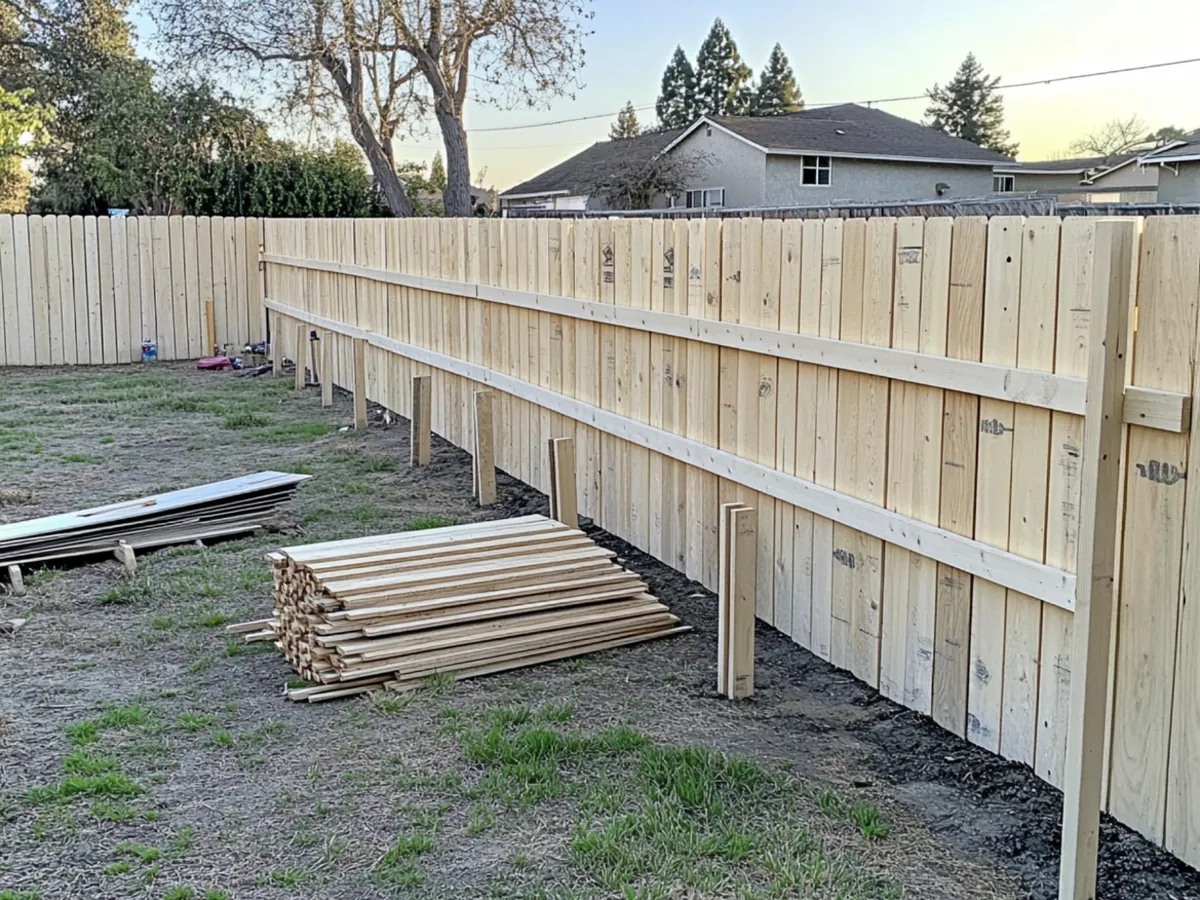
On install day, the crew digs the holes, sets the posts and lets the concrete cure. Depending on the fence, the rails and panels go on the same day or after a day or two of curing. Gates go in last so we can hang them on posts that have fully set.
When we're done, we haul off the old fence and the dirt from the holes, and walk the finished line with you.
Which Fence Fits Which Job
Each fence type does a different job well. Wood gives you privacy and a natural look at a fair price. Vinyl gives you the same privacy with almost no upkeep. Chain link is the practical answer for dog runs, back property lines and commercial lots. Ornamental steel and aluminum work best in front yards, around pools and along driveways, where you want a boundary without blocking the view.
Out on acreage, the job changes again. Horses need no-climb wire or rail fencing they won't get a hoof through. Cattle and goats call for field fence on steel T-posts with wood bracing at the corners. Deer fencing runs 7 to 8 feet tall to keep them out of gardens and orchards. We do a lot of this work around Anderson and Millville, where lots are measured in acres.
Once your fence is in, the gate is the part you'll use every day, so take a look at our gate options before you settle on a design.