
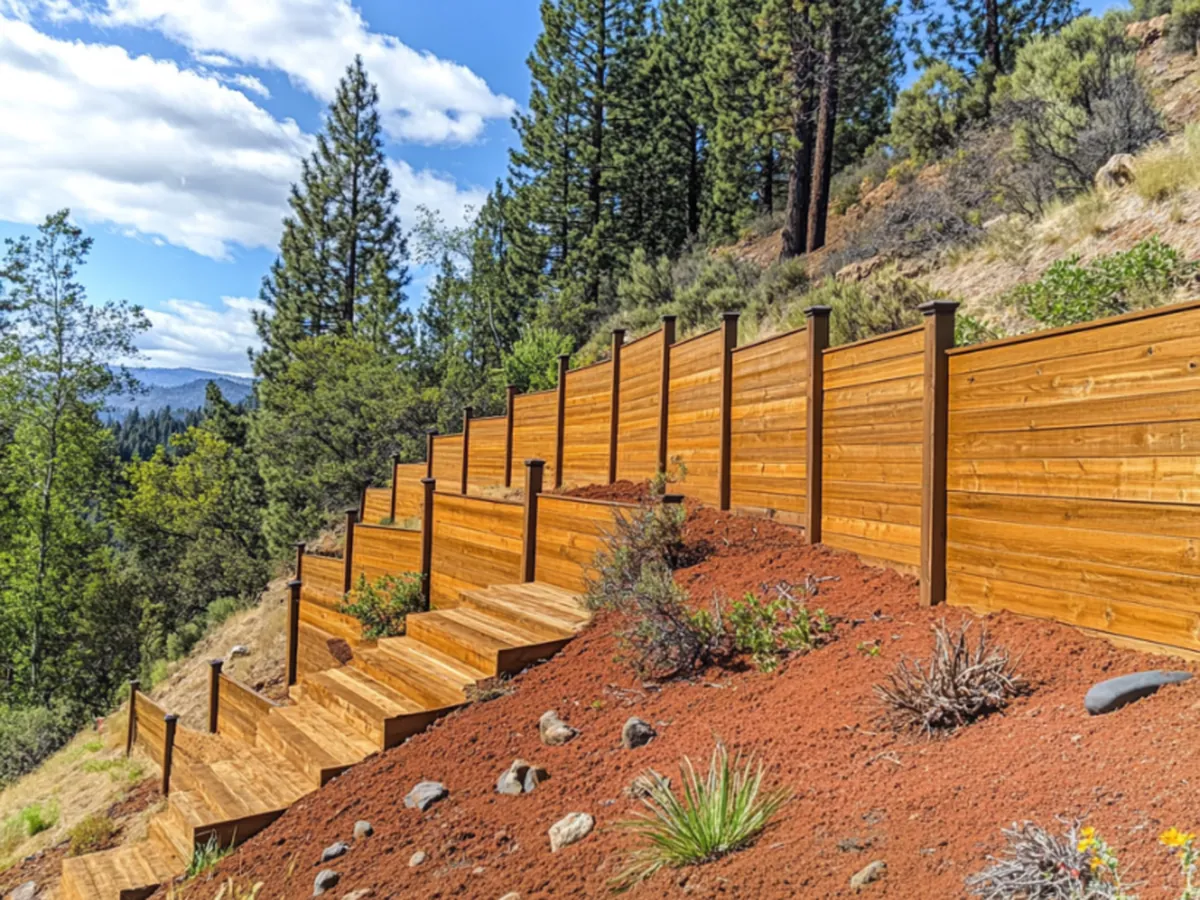
Shasta Lake is a different kind of fence job than the valley floor. The city sits in the foothills below Shasta Dam, and a lot of lots here slope, sometimes steeply. The ground is often red clay mixed with rock, and it's common to hit something solid a foot or two down. Add in hot, dry summers and the fact that fire has come close more than once, including the 2021 Fawn Fire just north of town, and you've got a place where how a fence is built matters as much as what it's made of. A fence that looks fine on day one can start leaning within a couple of years if the posts didn't go deep enough into this ground. Deer wander through a lot of neighborhoods here too, and they'll step right over a short garden fence.
We build and repair fences across the city, in the older parts of Central Valley, Project City and Summit City and in newer homes up the hillsides. Most jobs here are wood or vinyl privacy fences, with plenty of chain link and metal on bigger lots. If you've got a fence that's leaning after a wet winter, our fence repair team can usually save most of it. A typical backyard fence takes one to three days, though rock can add time. Sloped driveways often need a slide gate instead of a swing gate, and we build both. Call or send the form for a free estimate.
Shasta Lake Fence Rules
The City of Shasta Lake sets its own fence heights. In a front yard, and along the street side of a corner lot, fences can't go over 3 feet. In residential rear yards and side yards that don't face a street, the limit is 7 feet, which is a bit more room for privacy than many nearby areas allow.
On a sloped lot, height gets tricky. Fence height is usually measured from the ground on the side where it's lowest, so a fence stepping down a hill can end up taller than you planned at the bottom of each step. We lay out the steps so every section stays within the limit. Pool fences follow state rules on top of the city's: at least 60 inches tall, with self-closing, self-latching gates.
For the tallest privacy fences, vinyl fences hold up well here, since they won't rot where the hillside drains across the fence line.
Building on Slopes and Rock
Hillside fences need a different plan from the start. On a slope, the downhill side of each post carries more load, so we set those posts deeper. Panels either step down the hill in level sections or rack to follow the grade, depending on the fence style and how steep the lot is.
Rock is the other challenge. When a post hole hits solid rock, we use heavier digging equipment or a rock bit to get the depth the fence needs. Setting a post shallow just because the digging got hard is the most common reason hillside fences fail. On steep lots we often use steel posts, which are slimmer and easier to set in rock than thick wood posts. Big boulders tend to sit right where a fence line wants to go, so we route around them or anchor a post beside them.
Drainage matters too. Water runs downhill across fence lines after every storm, so gravel under each post keeps it from sitting in mud. Homeowners on the hillsides in west Redding and up toward Shingletown deal with the same issues, and we build for them the same way. Fire is part of the plan here too. A metal section closest to the house meets California's new Zone 0 rules for the first five feet around a home.