
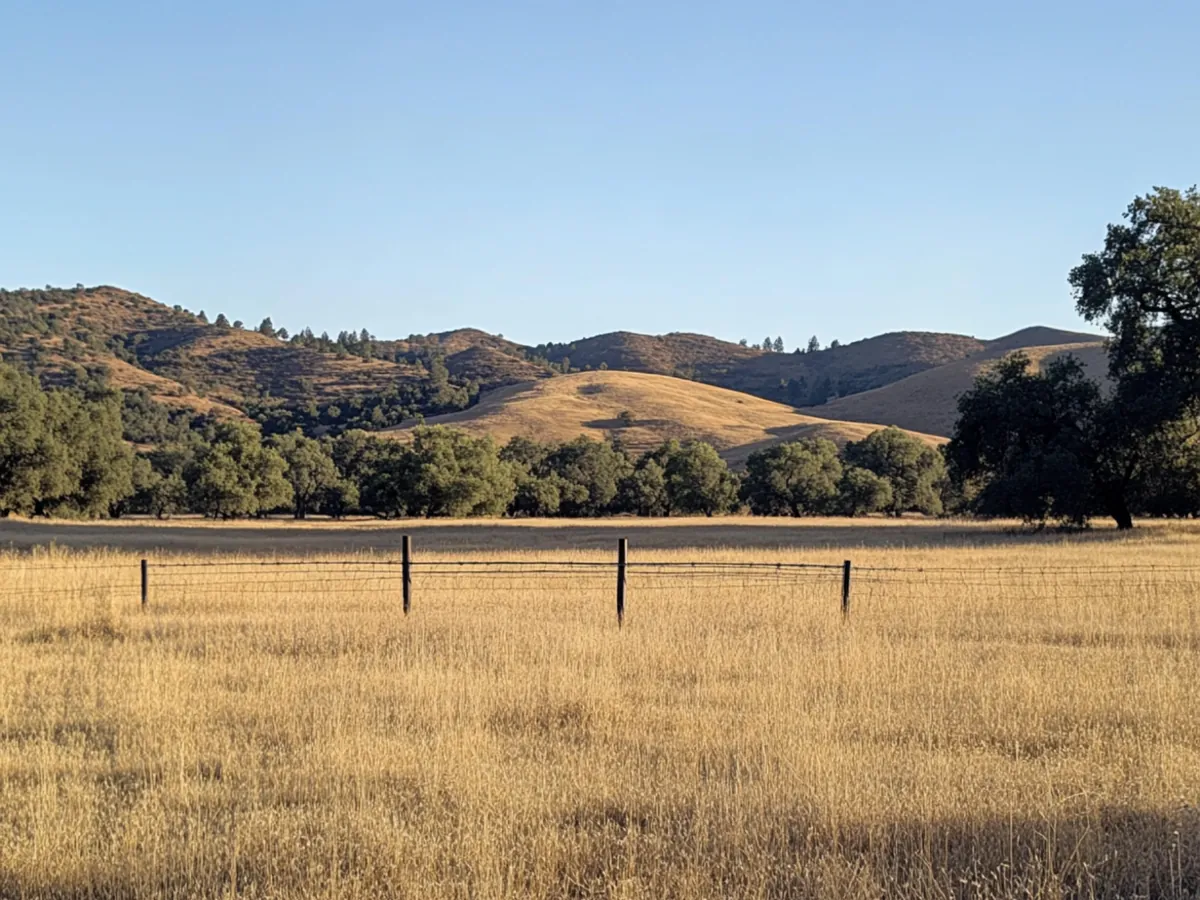
Cottonwood still feels like ranch country. It sits at the south end of Shasta County along I-5, right up against the Tehama County line, and a lot of properties here run cattle, horses, sheep or goats on open pasture. That puts a different kind of load on a fence. A backyard fence in town only has to stand up to wind and weather. Out here, a fence has to hold back animals that lean, push and test it every day, sometimes over a quarter mile of line. The ground is mostly valley clay and creek gravel near Cottonwood Creek, and summer heat on the open flats bakes fences that get no shade at all. A fence built light, with thin posts or weak corners, starts to sag within a season. Trailers, equipment and livestock trucks come and go on a lot of these properties, so gates and gate posts take more abuse than anywhere else on the line.
We build and fix fences across Cottonwood, from small homesteads with a few goats to bigger parcels with long perimeter lines. Most jobs here are field fence, barbed or smooth wire, wood rail and wide pasture gates, plus wood privacy fences around the house itself. A typical backyard fence takes one to three days, while a full pasture perimeter can run a week or more. We give you a clear schedule with your estimate. We also repair old pasture fence, replacing failed posts and restretching wire instead of starting over. Call or send the form to set one up.
County Fence Rules for Rural Cottonwood
Cottonwood is unincorporated, so Shasta County's zoning rules apply. Near the road, the limit is low: fences, walls and hedges in the required front yard, or on the street side of a corner lot, can't top 3 feet. Behind that, in residential side and rear yards, fences can go up to 6 feet.
The county code also has some exceptions for open wire fencing, which matters out here since most pasture fence is open wire. Bigger parcels often come with zoning and easements that change what's allowed where, especially along county roads and under power lines. Properties near Anderson-Cottonwood Irrigation District canals and laterals often have easements of their own.
That's why we look up your parcel before we build. A fence that ends up inside an easement can be ordered moved at your cost. If you're north of here, our crews cover Anderson and its city rules too.
Livestock Fencing That Holds
Each animal needs its own kind of fence. Cattle push hard, so we use field fence or several strands of barbed wire on steel T-posts, with heavy wood posts at the corners. Horses do better with rail or no-climb wire, since barbed wire can cut them badly. Sheep and goats need tight woven wire, and goats need it tall, since they'll climb anything they can get a hoof on.
The corners do most of the work. Every corner, end and gate post on a long run carries the pull of the whole fence line, so we brace them with H-braces made from wood posts and a diagonal tension wire. A fence with strong braces stays tight for years, while one without them starts sagging between posts by the second winter. We also build holding pens near barns, using heavier posts and tighter spacing where animals crowd together. Ranchers up in Millville rely on the same bracing on their long pasture runs.
For the house and yard, many owners still want something cleaner, like a wood fence or chain link to keep dogs close.