
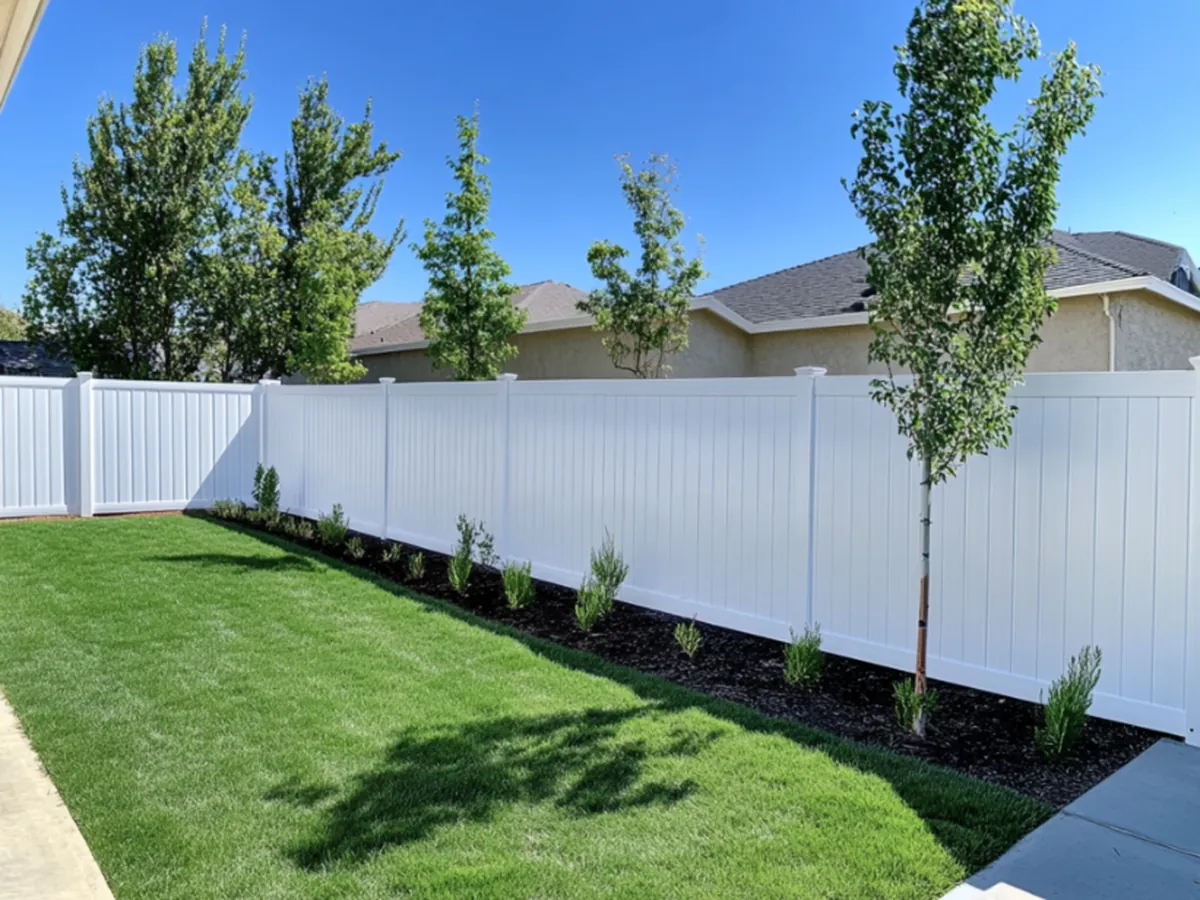
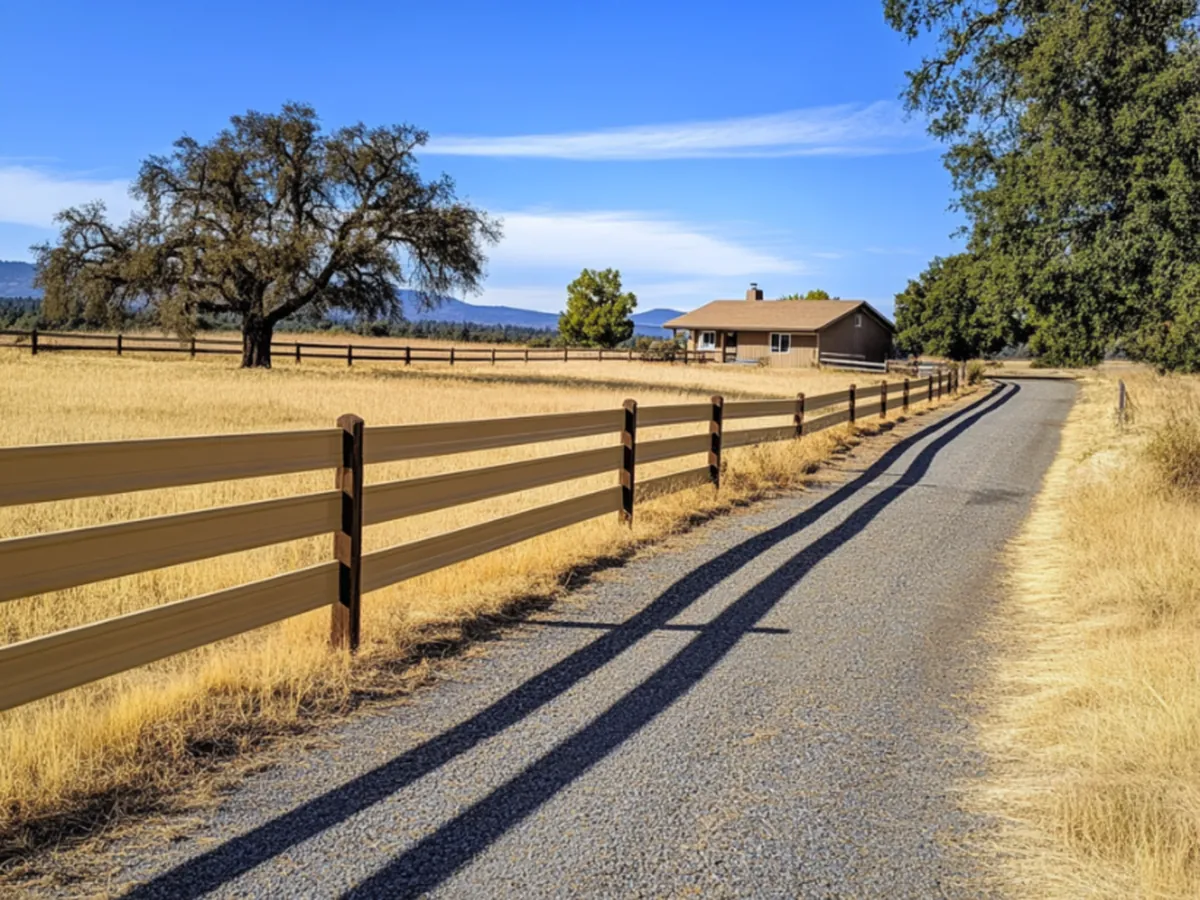
A lot of homeowners come to vinyl after years of restaining a wood fence. They're tired of the weekend spent with a brush and a bucket every couple of summers, and tired of watching boards gray and split anyway. Vinyl fixes most of that. It doesn't rot, termites don't touch it, and it never needs paint or stain. A hose usually takes care of the dust. It also won't splinter, which matters if you have kids or dogs running along it. In Redding, though, vinyl has one job wood doesn't: it has to handle 100-degree heat for weeks at a time without sagging or going brittle. That comes down to the material and how it's installed. We put in vinyl fences on newer lots in east Redding and out on acreage in Millville, where ranch rail vinyl lines a lot of driveways.
This page covers the signs vinyl is the right fit, what separates good vinyl from cheap vinyl, how we install it, and how it stacks up against wood over the years. Most vinyl jobs we do are 6-foot privacy fences around backyards, with picket and ranch rail styles out front. If you're still weighing materials, our wood fences page lays out cedar, redwood and pine side by side.
Signs Vinyl Is the Right Fit
Vinyl makes the most sense when you want privacy and don't want upkeep. If you plan to stay in the house for a long time, it pays for itself in stain and labor you'll never buy. It's also a good match for pool areas, since it's smooth, splinter-free and easy to keep clean.
It works well for picket fences in front yards too, where you want a clean look at the 3-foot height Redding allows. Out on bigger properties, two- and three-rail vinyl gives you the classic ranch look without the painting that wood rail fences need.
Vinyl is less ideal if you want a natural wood look, or if the fence has to stand up to livestock leaning on it. In those cases, wood or metal usually does the job better.
What Separates Good Vinyl From Cheap Vinyl
All vinyl fencing looks about the same in the showroom. The difference shows up after a few Redding summers. Quality vinyl is made with UV inhibitors, usually titanium dioxide, blended into the material. That's what keeps it from yellowing and turning brittle in the sun. Cheaper panels skimp on it.
Wall thickness matters too. Thicker posts and rails resist bending in the wind and hold up better to a bump from a lawnmower. Gate posts and bottom rails on wide panels should have steel or aluminum reinforcement inside, since vinyl alone can sag over a long span.
Color counts here more than people expect. White and light tan stay cooler. Dark colors absorb a lot more heat, and in our summers that can cause warping. We'll walk you through which colors hold up best in full sun.
How We Install a Vinyl Fence
Vinyl goes up a little differently than wood. We set the posts in concrete on a gravel base, the same as any fence we build, but the spacing has to be exact. Vinyl panels come in fixed widths, usually 6 or 8 feet, so every post has to land right where the panel needs it.
Vinyl also expands and contracts with temperature more than wood does. On a hot afternoon, a rail can grow measurably longer than it was at sunrise. We leave room in the post brackets for that movement, so the fence doesn't buckle in July or pull loose in January.
On slopes, we either step the panels down the hill or rack them to follow the grade, depending on the style. Gates get reinforced posts and hardware rated for vinyl.
Vinyl vs. Wood Over the Long Run
Vinyl costs more up front than most wood. Over time, the math tends to even out. A wood fence in our climate needs sealing every two to three years, and most wood fences need board and post repairs as they age. A quality vinyl fence needs none of that, and many manufacturers back their panels with long warranties. That warranty only holds if the fence was installed to the maker's specs, which is one more reason the install matters.
Lifespan favors vinyl as well. Well-made vinyl can last 20 years or more. Wood in Redding usually lands somewhere around 15 to 20, with pine on the shorter end and redwood on the longer end.
Where wood still wins is the look and the up-front price. If you're on the fence, we'll bring samples of both to your estimate.
Whichever material you choose, the install is where most of the long-term value lives, so take a look at how our fence installation process works before you decide.