
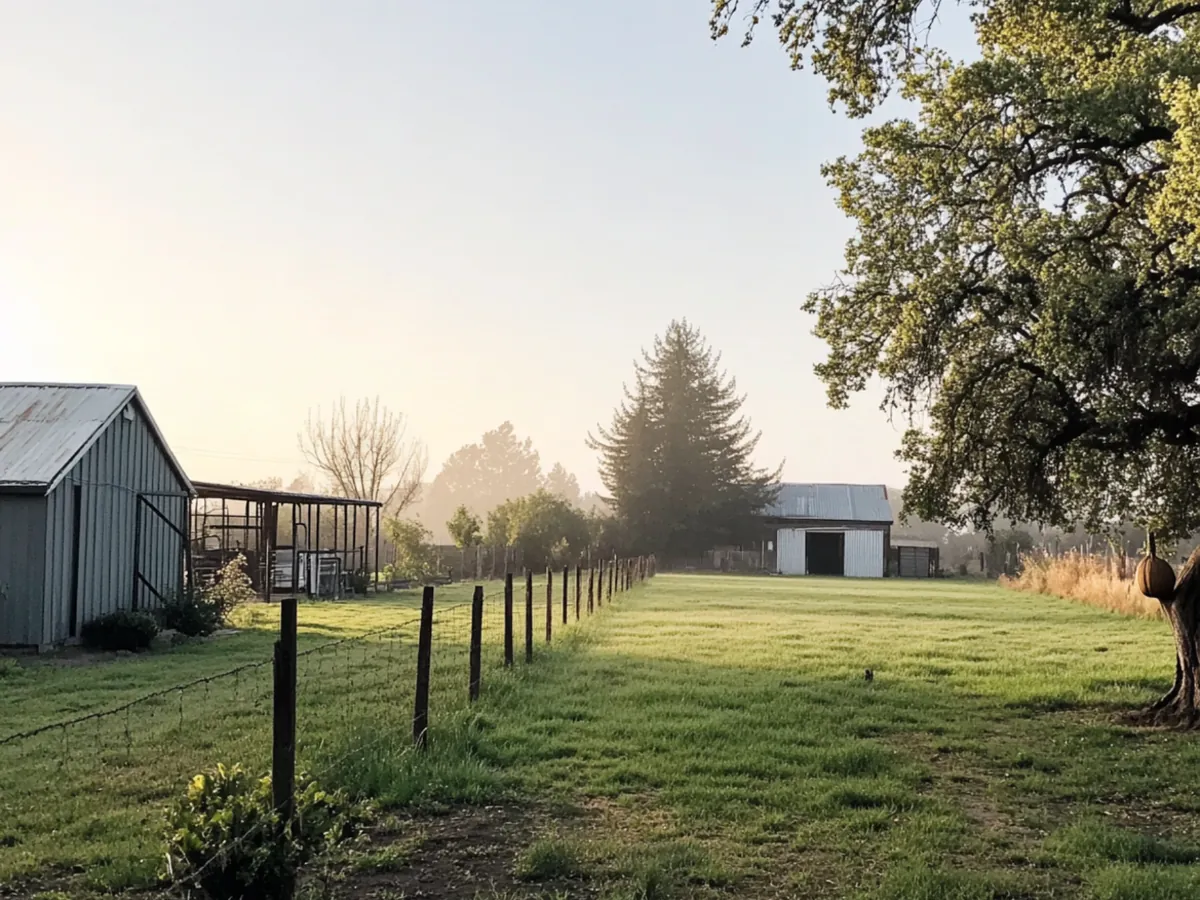
Anderson sits right on the valley floor, and that shapes how fences hold up here. Summers run just as hot as Redding, and the open ground south of town gives the wind a long runway. A lot of Anderson properties are bigger than city lots, with irrigated pasture, a few animals and long back lines that need fencing. The soil tends to be deep valley clay and river silt, which digs easier than the rocky hills north of Redding but holds water around posts after a wet winter. A post set without gravel underneath can sit in mud for weeks, and that's when rot starts. The Anderson-Cottonwood Irrigation District canal also runs through the area, and properties along it often have easements that limit where a fence can go. Many older homes near downtown still have their original fences, with posts that have been in the ground for decades.
We build and fix fences all over Anderson, from in-town neighborhoods to newer homes and rural parcels on the edges of town. That includes privacy fences for backyards, ranch and field fencing for animals, and long practical runs of chain link along property lines. Rural lots usually need a mix: privacy near the house and wire or rail on the pasture. Most backyard privacy fences take one to three days, and long pasture runs take longer depending on the footage. We also repair fences we didn't build. Call us or send the form for a free estimate on your property.
Anderson's Fence Height Rules
Anderson has its own fence rules, separate from Redding's and the county's. In the front yard, a fence can be no more than 3 feet tall within the 20-foot front setback, and the same 3-foot limit applies along the street side of a corner lot. Behind that setback, fences can go up to 6 feet.
That's lower than the 7 feet some neighbors in Shasta Lake can build along interior lines, so a privacy plan that works there may need adjusting here.
For a lot of Anderson homeowners, the practical layout is a 6-foot privacy fence around the backyard with a lower open fence or no fence across the front. We confirm your setback and lot lines before we quote, so the height and placement are right from day one. If you share a fence line with a neighbor, California's Good Neighbor Fence Act generally has both owners split the cost of a boundary fence, so it helps to talk early. Pool fences follow state rules on top of the city's: at least 60 inches tall, with self-closing gates.
Fencing for Animals and Irrigated Pasture
Plenty of Anderson properties have a horse, a few goats or a backyard flock, and each one needs a different kind of fence. Horses do best with rail fencing or no-climb wire, since a hoof can get caught in wide mesh. Goats test everything, so they need tight woven wire with a strong top. Chickens need small mesh to keep predators out.
Irrigation adds another wrinkle. Fence lines that run along irrigated fields or ditches stay wet for long stretches, which is hard on wood posts. We often use steel T-posts or treated posts rated for ground contact on those lines, with wood bracing at corners and gates. Before we set posts near the canal, we check for easements and keep the fence out of them. For dogs, chain link or welded wire with a tension wire along the bottom keeps them from pushing under. Wide ranch gates make it easy to get a tractor or trailer through.
If you're farther south toward the Tehama County line, our team covers Cottonwood too.