
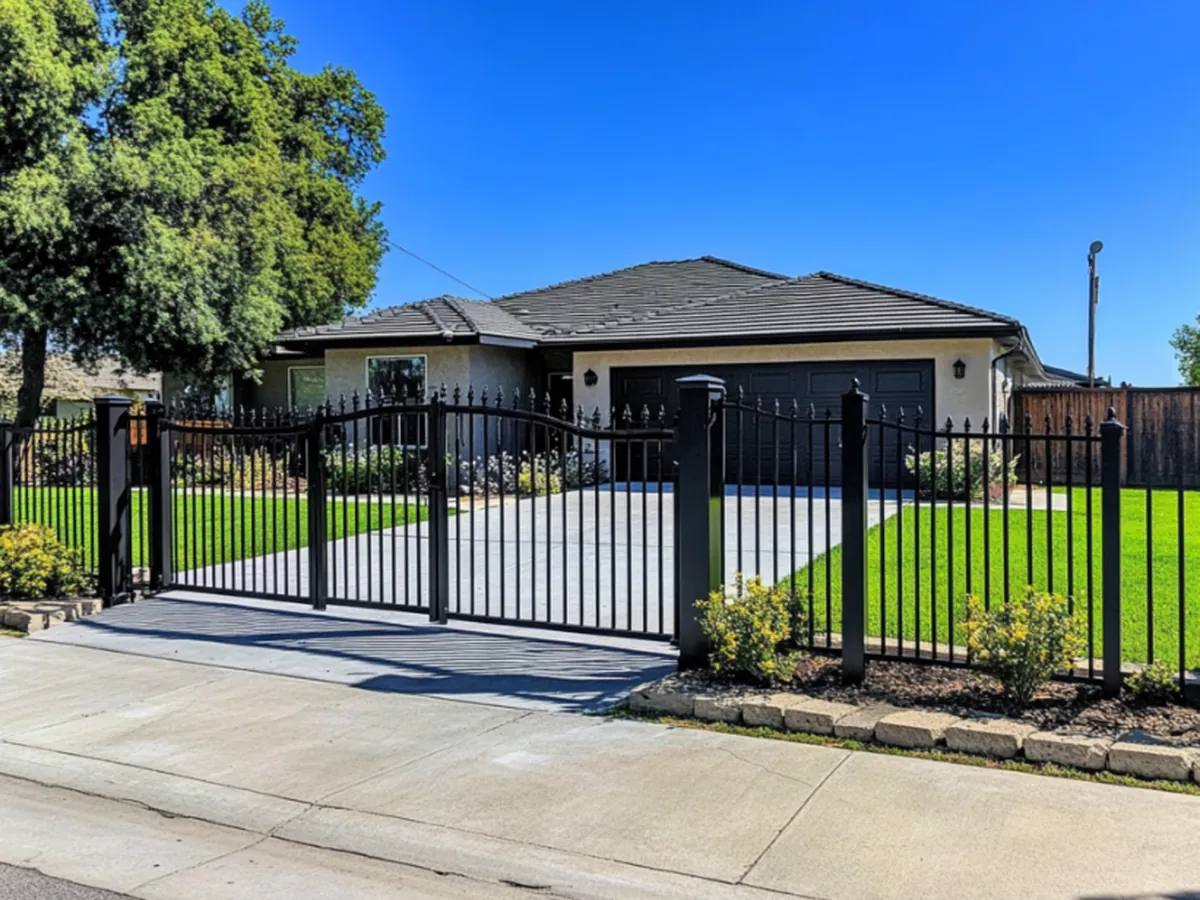
Metal fencing does something wood and vinyl can't. It marks your property line, keeps kids and pets where they belong and still lets you see the yard, the street and the view. That's why it shows up so often in front yards, around pools and along driveways. It also needs almost no upkeep. A powder-coated finish won't need painting for many years, and a hose takes care of the dust. In Redding it has another advantage. Metal doesn't burn, and since the Carr Fire, a lot of homeowners have started thinking about what sits right up against the house. We install ornamental metal fences on homes across the area, including wooded properties up near Shingletown and larger lots out in Palo Cedro, where a long run of black metal fence along the road looks sharp and lasts.
This page covers when metal fencing makes sense, how aluminum compares to steel and true wrought iron, what California requires for pool fences, and how we install it. Most of our metal fence jobs are 3-foot front-yard fences, 5-foot pool enclosures and 4- to 6-foot runs along driveways and back lines. If you need a matching driveway entry, our gates page covers swing, slide and automatic options.
When Metal Fencing Makes Sense
Metal fencing is the best fit when you want a secure boundary without blocking the view. Front yards are the classic example. Redding limits front-yard fences to 3 feet, and an open metal design looks finished at that height without feeling like a wall.
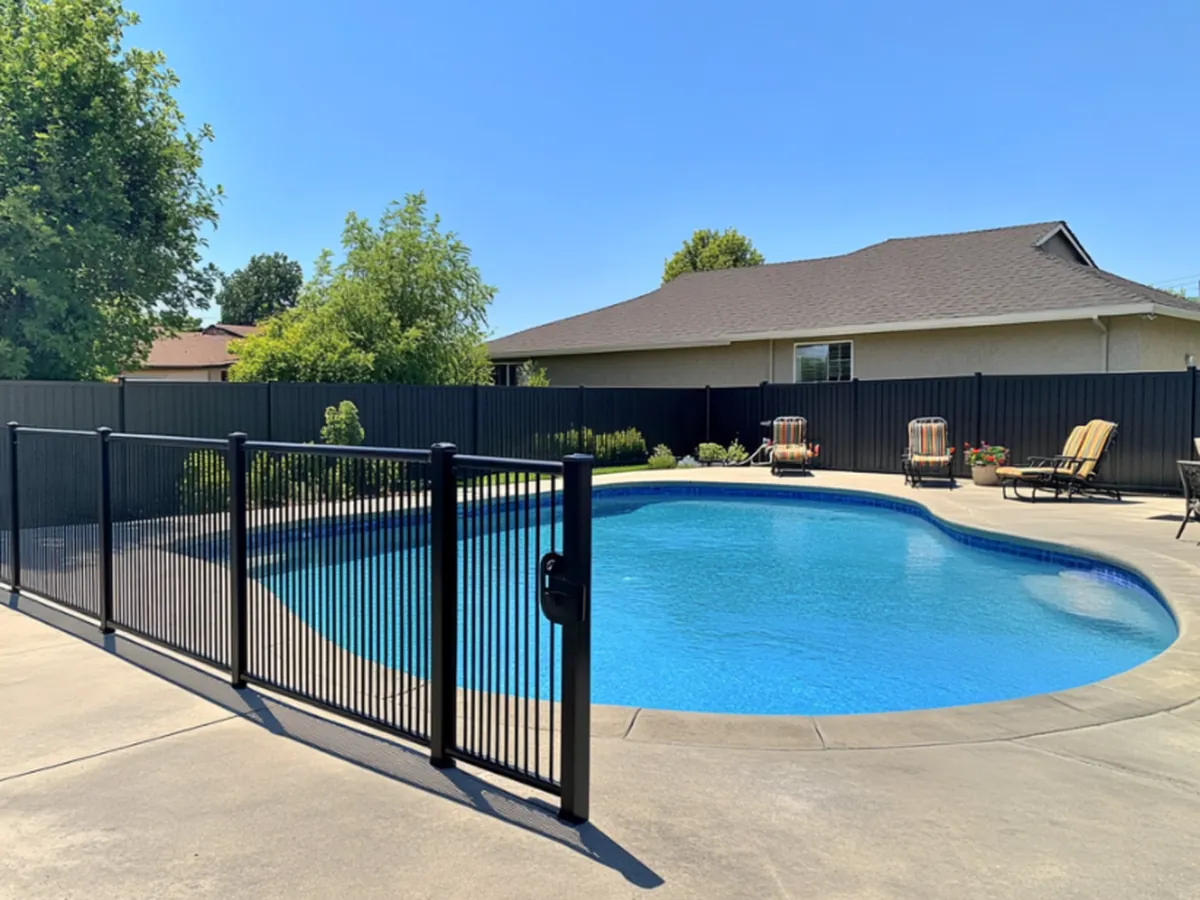
Pools are another. Metal fencing meets California's pool barrier rules cleanly, and it doesn't hide the pool from the house, so you can keep an eye on swimmers from the kitchen window.
It also makes sense near the house in fire country. California's new Zone 0 rules call for noncombustible materials within the first five feet of a home. Swapping a wood fence that ties into the house for a metal section is one of the simplest changes you can make.
Aluminum vs. Steel vs. True Wrought Iron
These terms get mixed up a lot, so here's the plain version. True wrought iron is hand-forged iron. It's very strong, very heavy and expensive, and these days it's mostly used for custom or restoration work.
What most people call a wrought iron fence today is ornamental steel. It's galvanized to fight rust and then powder-coated, which bakes a durable finish onto the metal. Steel is the strongest of the common options, so it's the choice for driveways, security and anywhere the fence might take a hit.
Aluminum is lighter and can't rust at all, which makes it a great fit around pools and sprinklers. It isn't as strong as steel, but for most residential fences it's more than enough. It's also easier to install on slopes, since many aluminum panels can be racked to follow the grade.
Both steel and aluminum come in black, bronze and other powder-coated colors.
California Pool Fence Requirements
If you're fencing a pool or spa, California's pool safety law sets the baseline. The enclosure has to be at least 60 inches tall, measured from the outside. Gaps between pickets, and the space under the bottom rail, can be no more than 4 inches. The design can't give kids a foothold to climb over.
Gates into the pool area have to open away from the pool, close on their own and latch on their own, with the latch mounted high enough that small children can't reach it.
Ornamental metal handles all of this well, since the picket spacing is built in. Some HOAs add their own rules on top of the state's, so we check your lot before we build. We build every pool fence to meet these rules and check them again at the final walkthrough.
How We Install Metal Fencing
Metal fence panels come in fixed widths, so layout matters. We mark every post location before we dig, adjusting the spacing around corners, gates and slopes so the panels line up clean.
Posts go into concrete on a gravel base, the same as our other fences. On steel fences, we set the posts deeper and use larger footings at gates and corners to carry the weight. Once the posts cure, the panels attach with brackets, and the gates get hung on heavy hinges with self-closing hardware where it's required.
On hillside lots, we either step the panels down the slope or use rackable panels that follow the ground. Either way, we keep the gap under the bottom rail tight so pets can't squeeze out.
Not sure metal is right for every part of your property? We often pair a metal front fence with wood or vinyl in back, so look over our fence installation options to plan the whole line.